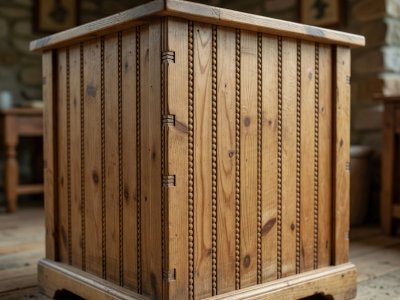
 End Panels
Clad exposed ends in beaded boarding
Pinning real 9 mm tongue-and-groove redwood matchboarding to exposed cabinet ends and framing the plinth with a simple timber skirt makes modular boxes read like bespoke furniture.
The most authentic cottage kitchens were never bought from a single showroom catalogue in one afternoon; they evolved piece by piece as householders added a plate rack, replaced a worn worktop, or inherited a sturdy pine dresser.
If your existing cabinet boxes are dry, square, and sitting in a workable layout, tearing them out to landfill wastes both effort and household funds. Here is how to stage updates sensibly without invented costs or disruptive chaos.
Before touching plumbing or carpentry, fix the elements that irritate your hands and eyes every evening. Harsh 4000K ceiling downlights flatten timber grain and cast your own shadow directly onto the chopping board when you stand at the counter.
Fit warm 2700K bulbs in ceramic or enamelled metal shades hung 750 mm above the prep table, and place a small shaded table lamp or wall sconce on a dark counter corner.
Fill old handle holes with two-part wood filler before painting, fit heavy cup pulls on drawers, and mount a brass rail with S-hooks beside the cooker for ladles and pans.
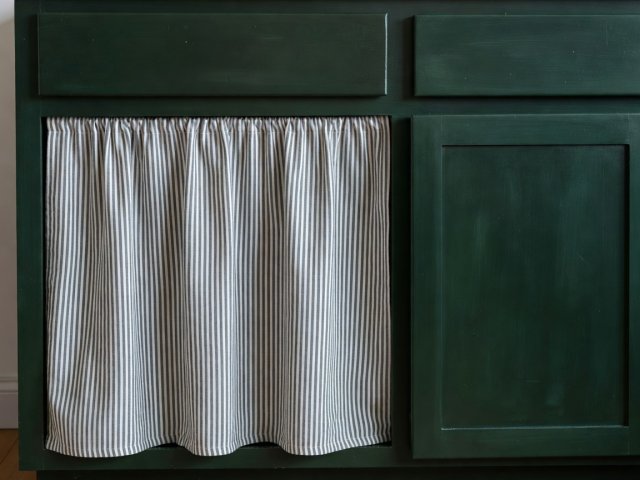
Remove a damaged or awkward double door beneath the sink and hang a washable heavy linen or ticking curtain on a tension brass rod for instant ventilation and access.
Standard 18 mm melamine-faced cabinet boxes last for decades so long as water does not leak into the base plinth. You can completely change the character of a dated fitted kitchen over two weekends using proper degreasing preparation and straightforward joinery additions.
End Panels
Pinning real 9 mm tongue-and-groove redwood matchboarding to exposed cabinet ends and framing the plinth with a simple timber skirt makes modular boxes read like bespoke furniture.
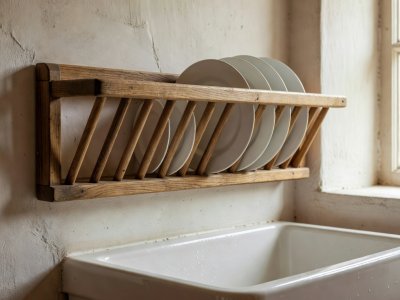 Upper Wall Relief
Taking down the wall cupboard above the drainer and mounting a slatted beech plate rack frees the worktop from plastic dish drainers forever.
When you are ready for structural replacements, do them in the right order so no work has to be redone. Always finalize sink style—whether a sit-on Belfast basin or an inset brass-rimmed bowl—before templating hardwood or stone worktops, because deep apron-front sinks require a lowered supporting cradle inside the base cabinet.