 Eye & Waist Zone
900 mm to 1,500 mm off the floor
Keep a cool slate or marble pastry slab at waist height (900 mm), with shallow 250 mm boards directly above for oils, vinegars, grains, pulses, and daily baking staples.
Good cottage storage does not rely on matching plastic bins or fussy calligraphy labels. It relies on visibility, airflow, and putting the heaviest items where your back does not have to strain.
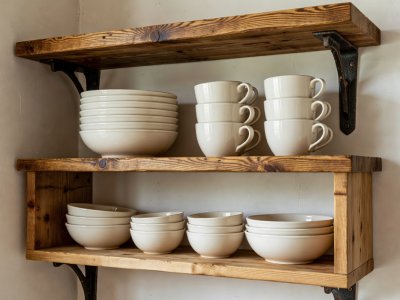
When open shelves hold only your high-turnover plates and the larder cupboard uses shallow boards that prevent packets hiding three rows deep, checking what you need for supper takes one glance.
Householders often worry that removing upper wall cabinets in favour of open timber planks will create an endless dusting chore. In practice, sticky kitchen film only builds up on items that sit untouched near frying pans. If you place open shelves over the sink or preparation counter—at least 450 mm sideways from the edge of the hob—and restrict them to crockery used every single day, nothing stays still long enough to gather dust.
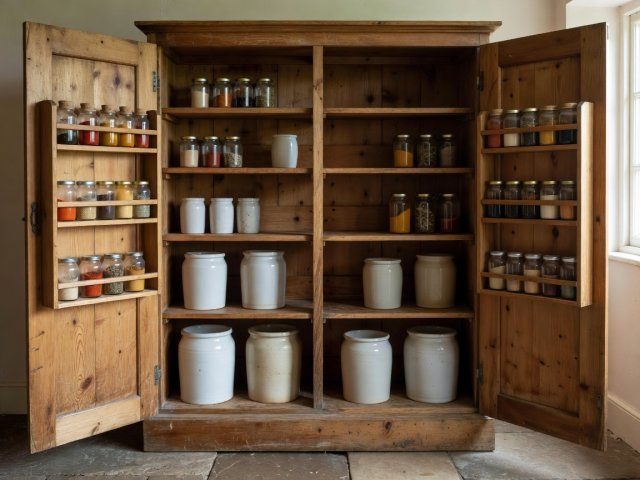
The single greatest flaw in standard 600 mm deep tall kitchen cupboards is that small jars vanish into dark caves behind cereal boxes. A traditional larder—or a converted standard tall unit—works best when shelves step back to 250 mm or 300 mm depth from waist to eye level, paired with 100 mm deep racks mounted on the inside of the solid doors.
Eye & Waist Zone
Keep a cool slate or marble pastry slab at waist height (900 mm), with shallow 250 mm boards directly above for oils, vinegars, grains, pulses, and daily baking staples.
 Floor to Knee Zone
Store bulk flour buckets, Dutch ovens, crates of bottled fruit, and breathable willow vegetable drawers down low where floor temperatures stay coolest.
Decanting every packet in the house purely for symmetry wastes Sunday afternoons. Instead, decant only when the original packaging tears, leaks, or invites pantry moths.
| Ingredient Group | Best Traditional Vessel | Storage Condition | Practical Tip |
|---|---|---|---|
| Flours, Oats & Sugar | Wide-mouth clamp glass jars or tinplate canisters | Cool, dry shelf away from cooker wall | Cut the baking times or expiry date from the paper bag and drop it inside the lid. |
| Potatoes & Root Veg | Unlined willow baskets or slatted timber drawers | Dark lower shelf (8°C–12°C) with airflow | Line basket base with a sheet of brown kraft paper to catch dry soil. |
| Onions & Garlic | Perforated terracotta crock or wire mesh basket | Separate shelf from potatoes | Onions release moisture that speeds up sprouting in potatoes if stored together. |
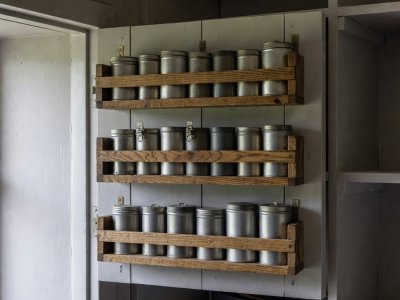
| Whole Spices & Tea | Opaque metal tins or amber apothecary glass | Door rack away from direct window sunlight | Light bleaches dried herbs and spices far faster than air alone. |