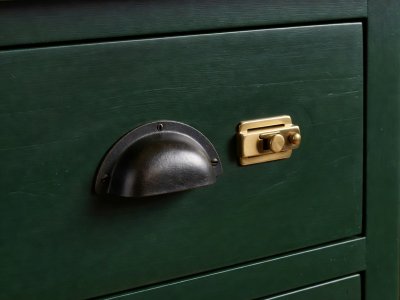
 Cupboard Hardware
Beeswaxed iron & unlacquered brass
Hooded cup pulls on drawers shield painted timber from fingernails, while oval cupboard turns and suffolk latches never snag apron pockets.
A cottage kitchen should never make you nervous to set down a warm mug or slice a loaf of bread. When you choose solid, repairable materials—hardwoods, honed natural stone, fireclay, quarry tile, and living brass—every year of cooking softens the room rather than spoiling it.
Combine worktops according to the job each counter performs, and anchor the joinery with warm, earthy paint colours that flatter both cloudy daylight and evening tungsten lamps.
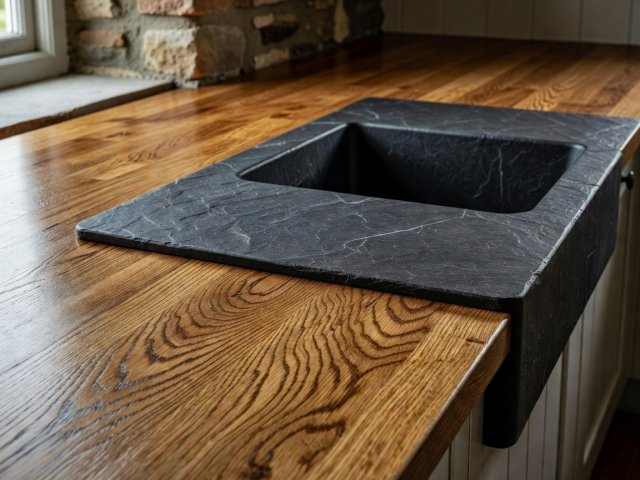
There is no rule stating every counter in a cottage kitchen must be cut from the same slab. In fact, vernacular sculleries almost always mixed materials: stone or lead around the wet sink, brick or slate beside the hot range, and warm hardwood or sycamore on the dry baking and preparation table.
| Countertop Material | Strengths in Daily Cooking | Honest Limitations | Maintenance Rhythm |
|---|---|---|---|
| Solid Oak, Beech or Ash | Warm under the forearm, quiet with crockery, easily cut and scribed to wonky cottage walls on site. | Scorches under red-hot skillets; black tannin stains appear on oak if wet iron tins sit overnight. | Light sand and wipe-on food-safe tung oil two to three times a year. |
| Honed Slate & Soapstone | Completely non-porous, ignores lemon juice, red wine, and pans straight off the flame. | Heavy to lift; sharp edges can chip delicate crystal glasses if knocked carelessly. | Wash with mild soapy water; optional mineral oil cloth rub to even out tiny surface scuffs. |
| Sycamore or Maple Baking Top | Tight, pale, closed grain that takes flour cleanly without imparting resin or tannin odour to pastry. | Best kept on a freestanding prep table away from constant sink splashes. | Scrape clean with a dough blade; wipe with a wrung-out hot cloth. |
| High-Pressure Matt Laminate (Ply Edge) | Budget-friendly, wide colour choice, zero sealing required for busy family rentals. | Cannot be sanded down if deeply gouged by a serrated knife; joints must stay sealed from steam. | Daily wipe with damp cloth; always use wooden trivets and chopping boards. |
Hardware is the handshake of the kitchen; you touch drawer pulls, cupboard latches, and tap levers dozens of times before breakfast is over. Choose heavy, solid castings over hollow plated zinc.
Cupboard Hardware
Hooded cup pulls on drawers shield painted timber from fingernails, while oval cupboard turns and suffolk latches never snag apron pockets.
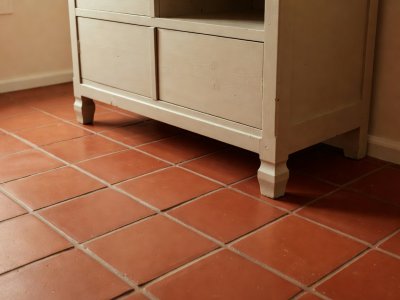 Underfoot Warmth
Staffordshire red quarry tiles and natural linoleum sheet offer gentle grip underfoot and sweep clean of garden soil in moments.
Many cottages have small casement windows set into thick stone walls. Rather than fighting low light with clinical blue-whites—which turn grey and chilly in overcast weather—lean into saturated forest greens (`#12332b`), warm olive, terracotta coral (`#ff6f59`), raw sienna, and creamy limewash plaster (`#e0f2e8`).